GZUCM Visits KWNC to Promote Guangdong-Macao Exchanges in Nursing Education
Aiming at gaining an insight into the development of Macao’s nursing education, exchanging teaching approaches and promoting further interaction and collaboration, a delegation of four teachers from Guangzhou University of Chinese Medicine (GZUCM) paid a 10-day academic visit to Kiang Wu Nursing College of Macau (KWNC) from 17 March to 26 March 2014. During their stay, the guests visited KWNC’s teaching facilities including lecture rooms and laboratories, observed lectures of various classes and subjects, observed clinical study lessons and participated in teachers’ workshop, etc.
GZUCM and KWNC have long been in a steady collaborative relationship where for years GZUCM teachers have been taking part in the subject teaching of KWNC’s Traditional Chinese Medicine and Nursing. Moreover, beginning from last year, the two institutions have launched a student exchange programme which has already registered a participation of 10 students so far. Furthermore, this recent academic visit has also made another big step towards a closer relationship among teachers of the two institutions.
The delegation leader Associate Professor Ding Fuping of GZUCM commended that the entire visit was rewarding and the visit to the nursing laboratory was particularly inspiring. She noted that by enabling students to videotape and review their own operations, the introduction of computer technology to teaching equipment contributes to the improvement and strengthening of students’ operational skills. In addition, Professor Ding spoke highly of KWNC’s dedication in acting in concert with the Macao SAR Government’s policies of ameliorating Macao’s health care system and enhancing the health quality of the general public. In addition to establishing and running academic programmes, KWNC has been committed to initiating different research projects and getting involved in various social services. Professor Ding is pleased to see that KWNC has been advancing at the same pace with the local society whilst fulfilling its educational duties.
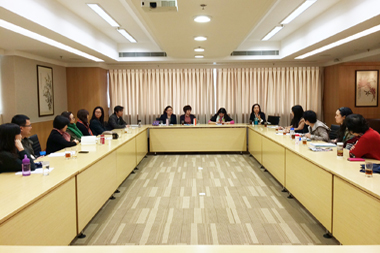
Approaching the end of the visiting trip, a teacher exchange meeting was held in the Mong Ha Campus. At the meeting, Professor Ding added that differences exist in terms of the teaching approaches of the two places. Teachers in Macao enjoy a higher degree of autonomy where they are allowed to merge their own expertise and personal experience into the teaching contents. This approach is more flexible and is more likely to encourage students’ self-directed learning. By contrast, in an attempt to consolidate students’ fundamental knowledge, teachers in the Chinese Mainland are required to follow the teaching plan, teaching key points and time frame stipulated by the country. Moreover, theory teaching and clinical teaching are undertaken by individual teachers, and consequently more efforts are needed to be put in combining students’ theoretical and clinical knowledge. On the other hand, in spite of heavier workload, by shouldering both theory teaching and clinical teaching, teachers at KWNC gain a better understanding of students’ learning progress of both areas. Professor Ding noted also said that the teaching approach adopted by KWNC is effective in enhancing students’ learning outcome and is thus worth emulating. Professor Zhu Mingxia of KWNC commended on GZUCM teachers’ prudent attitude towards teaching and their endeavours to solidify students’ fundamental knowledge. Professor Zhu believes that, under the guidance of the national education policies, GZUCM teachers are bound to succeed in bringing personal experience into their teaching.
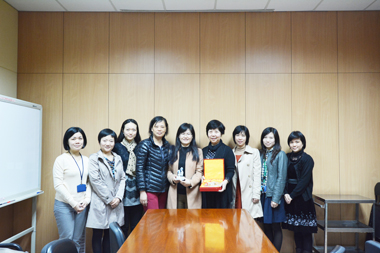
The delegation of this visit was formed by GZUCM Associate Professor Ding Fuping specializing in traditional Chinese medical nursing and nursing psychology, Associate Professor Wu Xiaowan specializing in nursing theories and fundamentals of nursing, Teacher Yang Xiaoduo specializing in community nursing and gerontological nursing, and Teacher Shi Zhenni specializing in fundamentals of traditional Chinese medical nursing and paediatric nursing.