KWNC Holds“International Symposium on Higher Nursing Education in Macau”
Driven by the rapid development of its tourism and gaming industries, Macau has achieved soaring economic growth in recent years, yet it is believed that medical and health sector plays an important role for a society to advance in healthy steps. Therefore, nurses' roles in a medical system are of vital importance. Under the current shortage of local nursing manpower and the need to put emphasis on the quality of nursing service to foster excellent professional nurses, nursing education is the key factor of concern in Macau. On Dec. 2 nd and 3 rd , 2011, an “ International Symposium on Higher Nursing Education in Macau” was held by Kiang Wu Nursing College of Macau and conducted in different sessions, including keynote addresses, seminar for students and roundtable discussion .
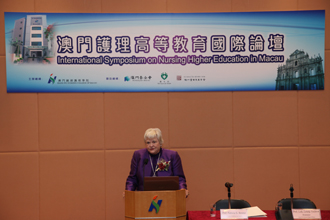
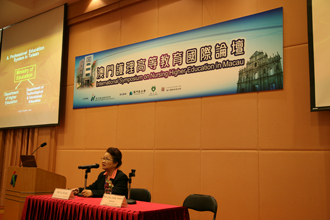
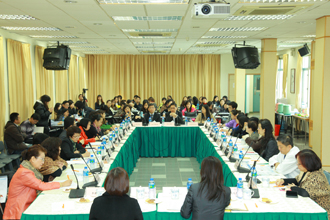
Invited keynote speakers for the symposium are Prof. Patricia E. Benner, the renowned international nursing educator from University of California , San Francisco , Prof. Yu Yu Mei, Chairman of Higher Education Evaluation & Accreditation Council of Taiwan , Prof. Guo Gui Fang, Dean of Peking University School of Nursing and Dr. Lum Shun Sui, Chairperson of Hong Kong Academy of Nursing Preparatory Committee. They delivered intensive talks around the issue of higher nursing education from educational, practical and policy perspectives. The 2-day Symposium aims to explore the theory and practice of nursing professional cultivation and the improvement of nursing education system as well as to discuss the fostering of multi-health care givers and standardization of nursing higher education in Macau .
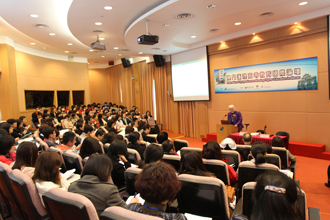
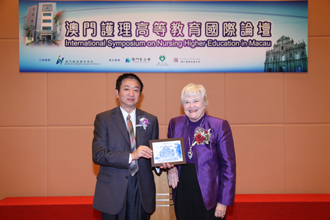
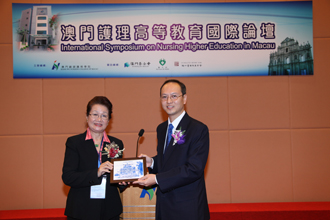
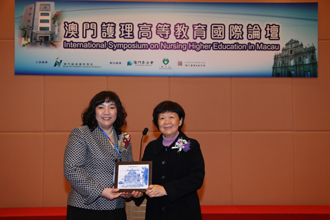
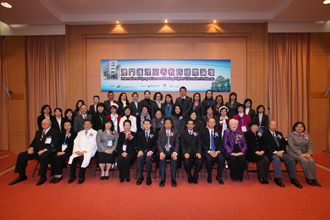
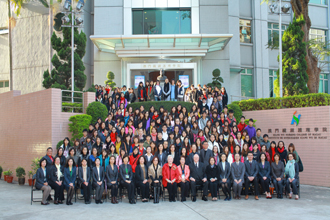
The opening ceremony of the Symposium was held at 9:30 on Dec. 2 nd at the Lecture Theatre of KWNC. Officiating guests invited to the ceremony were Director of Education and Culture Department of Liaison Office of the Central People's Government in the Macau SAR Liu Xiao Hang, Coordinator of Tertiary Education Services Office Sou Chio Fai, Member of Administrative Committee of the Macau Foundation Au Weng Chi, Deputy Director of Health Bureau Cheng Seng Ip, Chairman of Board of Directors of KWNC Fong Chi Keong, Vice-chairman of Board of Directors and Secretary-general of Kiang Wu Charitable Association Ng Pui Kun, Director of Kiang Wu Hospital Ting Wai Wang, Vice-president of Macao Polytechnic Institute Yin Lei, Secretary -general of Macau Henry Fok Foundation Si Hou, Head of Elderly Service Division of Social Affairs Bureau Lam Pui Seong, Nurs ing Director of Health Bureau Estela Ma, President of KWNC Van Iat Kio, etc. The event attracted an attendance of over 300, including the representatives of various higher education institutions, hospitals and communities, n ursing workers and student nurse s from 12 provinces of Mainland China including Beijing, Inner Mongolia and Harbin, the medical workers, nursing faculty members and students from Hong Kong and Macau, etc.
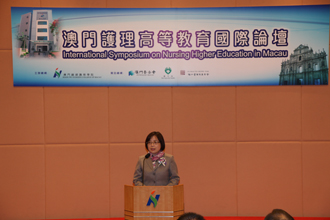
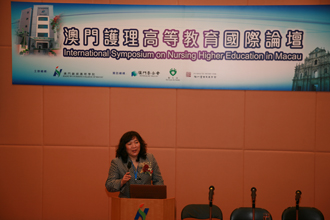
President Van Iat Kio in her welcome speech pointed out that with the increasing demands for health care services by Macau citizens, the SAR government has planned to inject over 10 billion Patacas into the improvement of Macau 's medical and health care service system within ten years. It is expected that the resident-nurse ratio in 2020 will rise to 1000:4 from the current level of 1000:2.8, and there will be a fast growth of student numbers in nursing science in the years to come. She encouraged nursing educators and senior nurses to keep pace with the time against the ever-changing social environment where lack of consensus and norm, senses of trust, responsibilities and even undertaking power among people, which creating impact on the youngsters' entering into the nursing profession.
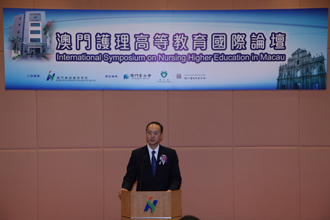
As indicated by Coordinator Sou Chio Fai in his address, the government has been paying much attention to talent cultivation. At present a comprehensive human resources database is under construction. Being one of the important assets of the society, a great number of professional nursing staff is in urgent need of cultivation in Macau in order to tackle the problem of population ageing. The information of the HR database will help the government understand the practical situation and set up long-term training policy for nursing workers. The SAR government will give full support for nursing education and enhance nurses' standard.\
The quality of nursing service is close related to nursing education and tends to be varied with the changes of social trend and medical system. Nowadays in the knowledge society which also means a lifelong learning age has emerged, the issue of how to foster quality nursing professionals has become the major concern of all walk of life. Prof. Patricia E. Benner notices the novel learning mode of three apprenticeships generally adopted in the U.S. , including the three levels of cognition, skills and tricks and clinical judgment, ethical habitude and professional value. She advocates that nursing education has to integrate these three apprenticeships while conducting integrative pedagogy, sense of salience teaching and situational training, so that student nurses can enhance their application abilities of clinical knowledge in nursing practice.
According to Prof.Yu Yu Mei, using of nursing education assessment is good to improve the academic quality of nursing faculty and to foster nursing workers needed by the society. Meanwhile the self-administering mechanism through a new organ of peer review will facilitate the constant advancement of nursing education. Prof. Guo Gui Fang put forward the issue of exploring the development framework of nursing profession theory and practice system, identifying the core competencies and practice fields of different level of nurses. She also indicated that the establishment of scientific and rational talent cultivation and utilization mechanism is a key topic for the development of nursing industry. Dr. Lam Shun Sui suggested that nurses in service should always update the knowledge and skills of themselves through continuing education to cope with the ever-developing sciences and techniques so as to strengthen their professional and advanced nursing practice.